





The joint decision is historic, but what does it mean specifically for your crypto portfolio?
For years now, the entire cryptocurrency industry has operated under a fog of regulatory uncertainty. Investors and developers alike were wondering which crypto asset the U.S. government might suddenly decide to classify as an unregistered security. Take Ripple’s XRP, for instance – one of the most obvious examples. The company was tangled in a prolonged lawsuit with the Securities and Exchange Commission, which lasted roughly half a decade, casting the shadow of ambiguity over an entire cohort of investors.
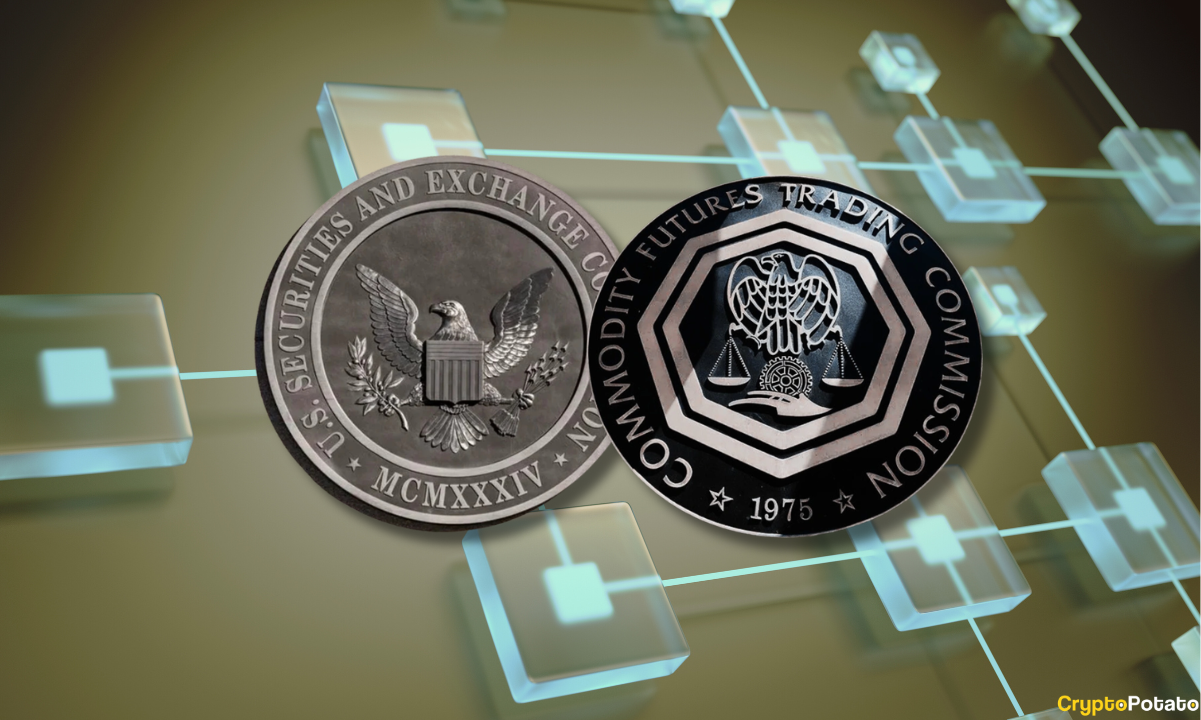
That era, however, effectively ended on March 17th, when the SEC, together with the Commodity Futures Trading Commission (CFTC), issued a landmark joint interpretive guidance.
The core takeaway, stated by the Chairman of the SEC, Paul Atkins, represents a true paradigm shift:
Most crypto assets are not themselves securities. – He said.
But while significant and historic, what does it all mean for the regular Joe? Here is a breakdown of what this decision means for your crypto portfolio, your staking yields, and your airdrops.
Staking and Airdrops: The Rules of Engagement
Staking and airdrops are perhaps two of the more common ways many retail crypto investors participate in decentralized networks. They have also historically been some of the biggest legal gray areas. The new joint guidance draws some clear and actionable lines for both of these.
First things first, for staking, the regulatory status would now depend on the structure of operation. If you are participating in protocol-level staking (read: locking up your tokens in order to secure a blockchain network like Ethereum, for example, and earning automated and pre-determined protocol rewards), this particular activity would generally fall outside of the scope of securities laws.
However, if you use a centralized, third-party service that pools investor funds and then promises a return based on its own managerial efforts, chances are regulators will still classify that yield product as a security (an investment contract).
You may also like:
Moving on to airdrops. These face a relatively similar test depending on context. Tokens that are distributed freely to a community, without requiring a financial investment or promising future profits based on the centralized team’s efforts, are currently a lot less likely to be classified as securities. On the other hand, if the airdrop is advertised and used explicitly to promote an investment opportunity, promising future returns based on the team’s efforts, it may still draw the scrutiny of the SEC.
A New Taxonomy for Digital Assets
If you’ve been around in crypto for a while, you know that there’s been an overlapping jurisdictional battle that has simply plagued the industry for years. The new joint guidance establishes a formal token classification framework. This taxonomy categorizes digital assets into distinct groups.
- Digital Commodities: These fall primarily under CFTC jurisdiction and concern assets that function primarily as a decentralized medium of exchange or store of value.
- Digital Collectibles: These are unique digital items and non-fungible tokens (NFTs).
- Digital Tools: These are utility tokens used to access or operate software applications or networks.
- Stablecoins: Digital assets pegged to fiat currencies.
- Digital Securities: Tokens that represent traditional investment contracts, equity, or profit-sharing agreements.
Essentially, by effectively separating the underying digital asset from the transaction itself, both regulators have provided a rather coherent roadmap for developers to build networks that are compliant without the constant fear of arbitrary enforcement.
Conclusion: What the SEC/CFTC’s New Guidance Means for Your Crypto
For everyday crypto investors, this guidance is a massive de-risking event. The Chairman of the CFTC said that the goal is to further foster an environment where the entire industry can flourish with “clear and rational rules of the road.”
Speaking practically, this means that major altcoins are much less likely to face sudden delistings from U.S. exchanges due to unexpected regulatory lawsuits or even the fear of them.
Moreover, it paves the way for a robust integration of digital assets into traditional finance – something that we have already seen starting to take shape. Recall that Mastercard enlisted Ripple, Binance, and other firms in a new crypto partnership, seeking to further integrate crypto into mainstream commerce.
Of course, the decision doesn’t necessarily guarantee the market success of any individual token, but at the very least it removes the heavy regulatory overhang that has suppressed US-based crypto markets (and arguably globally) for years.
Binance Free $600 (CryptoPotato Exclusive): Use this link to register a new account and receive $600 exclusive welcome offer on Binance (full details).
LIMITED OFFER for CryptoPotato readers at Bybit: Use this link to register and open a $500 FREE position on any coin!