







The crypto market update bitcoin war hedge Strait of Hormuz news today centers on a striking development: Iran’s IRGC has established a formal toll system at the world’s most critical oil chokepoint, demanding payments in stablecoins or Chinese yuan for naval escort through the strait — yet despite crypto’s growing role in wartime finance, Bitcoin has underperformed gold significantly since the conflict began on February 28.
Summary
- Bloomberg reported April 1 that Iran’s IRGC is charging ships a baseline of $1 per barrel — up to $2 million per very large crude carrier — payable in stablecoins or yuan, with a five-tier “friendliness ranking” system determining access and escort terms
- Chainalysis estimated Iranian-linked on-chain crypto activity reached $7.8 billion in 2025, with stablecoins playing a central role; Iran legalized Bitcoin mining in 2019 and its Ministry of Defense has accepted crypto for military export contracts since January 2026
- Bitcoin has underperformed gold as a wartime hedge since the conflict began, sitting at rank 12 by market cap with dominance at 59%, while gold has held safe-haven capital that Bitcoin has not captured
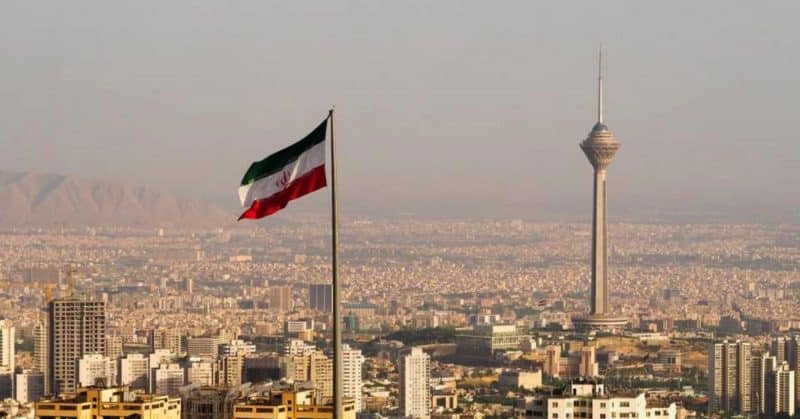
The crypto market update bitcoin war hedge Strait of Hormuz news has a sharper edge than most market commentary suggests. According to Bloomberg’s report from April 1, Iran’s IRGC has formalized control over the world’s most important oil chokepoint into a structured payment gateway. Ship operators seeking Hormuz transit must submit vessel ownership records, flag registration, cargo manifests, crew lists, and AIS tracking data to an IRGC-linked intermediary. The IRGC then assigns the ship a ranking on a five-tier “friendliness” scale — lowest rankings get most favorable terms. Once payment is received, a single-use passcode is broadcast over VHF radio and an Iranian naval escort guides the ship through.
Critically, Iran is demanding payment in stablecoins — not Bitcoin — specifically because stablecoins eliminate price volatility between invoice and settlement, making them functionally equivalent to dollar wire transfers while remaining outside the US dollar clearing system. Oil tankers start at around $1 per barrel, with very large crude carriers paying up to $2 million per transit. At least 15 to 18 ships have transited under this system in recent weeks.
Iran’s Crypto Infrastructure Is Not New
The Hormuz toll system is the most visible iteration of a much longer-running strategy. Iran legalized Bitcoin mining in 2019, at its peak contributing an estimated 4 to 5% of global Bitcoin hash rate. Chainalysis estimates Iranian-linked crypto activity reached $7.8 billion on-chain in 2025. In January 2026, Iran’s Ministry of Defense Export Center updated its systems to accept stablecoin payments for drone, missile, and other military export contracts.
Iran’s parliamentary National Security Committee approved a formal “Strait of Hormuz Management Plan” on March 31, which includes an official toll structure that references Iranian rials as currency but operates in practice with yuan and stablecoins to bypass OFAC enforcement.
Is Bitcoin a War Hedge? The Data Says Not Here
As crypto.news reported, Bitcoin has dropped roughly 12% since the war began, while gold — despite its own volatility — has retained more safe-haven capital. Bitcoin sits at rank 12 by market cap, well behind gold at the top, and BTC dominance of 59% reflects consolidation rather than flight-to-safety flows. The Coinbase Premium Index has been in negative territory throughout the conflict, signaling US spot demand has not materialized in the way gold demand has.
As crypto.news noted, each confirmed escalation event in this conflict has produced immediate Bitcoin selling rather than buying — the opposite of what a war hedge would deliver. The stablecoin role in Iran’s Hormuz system is operationally rational: it solves a payment problem. Whether Bitcoin becomes a war hedge depends on a different question — whether retail and institutional capital decides to treat it as one.
“Bitcoin still trades more like a high-beta risk asset than a defensive hedge in the current climate,” one Orbit Markets analyst told Bloomberg this month.