Ripple executive Reece Merrick said crypto payments are moving through the same early stage that e-commerce faced more than two decades ago.
Summary
- Merrick says crypto payments resemble early e-commerce before infrastructure made online shopping normal for consumers.
- Stablecoins, on-ramps and scalable blockchains now serve as payment infrastructure, similar to broadband and smartphones.
- Recent Ripple coverage shows payment growth, but XRP demand remains separate from ledger adoption.
He compared today’s crypto payment market with online retail in 2000, when internet shopping made up only a tiny part of global retail sales.
“In 2000, the dot-com bubble was bursting and buying things online was globally negligible,” said Ripple executive Reece Merrick.
He said consumers did not yet trust the web with their money, even though the systems behind online shopping were already forming.
Merrick said global e-commerce later became part of daily life because infrastructure improved. Secure payment gateways, better internet access and smartphones helped users buy goods online with less friction.
Payment infrastructure remains the key test
Merrick said crypto payments are now in a similar infrastructure phase. In his view, scalable blockchains, stablecoins, regulated fiat on-ramps and simple wallets play the role that broadband, cards and mobile phones played for e-commerce.
“Crypto payments are quietly moving through the same slow, foundational phase before inevitable mainstream normalization,” said Merrick.
His comments pointed to payments rather than trading as the area where crypto may gain wider use.
As previously reported by crypto.news, Ripple CEO Brad Garlinghouse said stablecoins may become a main entry point for businesses using crypto. He said finance teams and treasurers are reviewing stablecoins for payments and treasury operations.
That view matches Ripple’s current product direction. The company has focused on stablecoins, cross-border payments, tokenized settlement and enterprise infrastructure while pushing for clearer U.S. digital asset rules.
Stablecoins give payments a clearer path
Ripple has expanded its payment stack through stablecoin integrations. As crypto.news reported, Ripple and Bitso launched MXNB, a Mexican peso-backed stablecoin, on the XRP Ledger. Ripple said MXNB and RLUSD can support regulated settlement between the U.S. and Mexico.
Ripple has also added tools for AI-agent payments. In a recent update, crypto.news covered Ripple’s XRPL AI Starter Kit, which lets software agents use XRP and RLUSD for automated payments through the x402 protocol.
Mastercard has moved in the same direction. Previously, crypto.news discussed Mastercard’s global settlement network, which supports USDC, RLUSD and PYUSD. The report said dollar-backed stablecoin supply was nearing $300 billion, with USDT and USDC holding the largest share.
These payment tools do not mean every user will handle crypto directly. Like e-commerce, adoption may depend on whether users can pay, settle and move money without seeing the technical layer behind the transaction.
XRP demand remains a separate question
Ripple’s payment growth also leaves a separate question for XRP. In a previous article, crypto.news discussed how banks can use the XRP Ledger without buying large amounts of XRP. Stablecoins and tokenized assets can move on the ledger while using only small XRP amounts for fees.
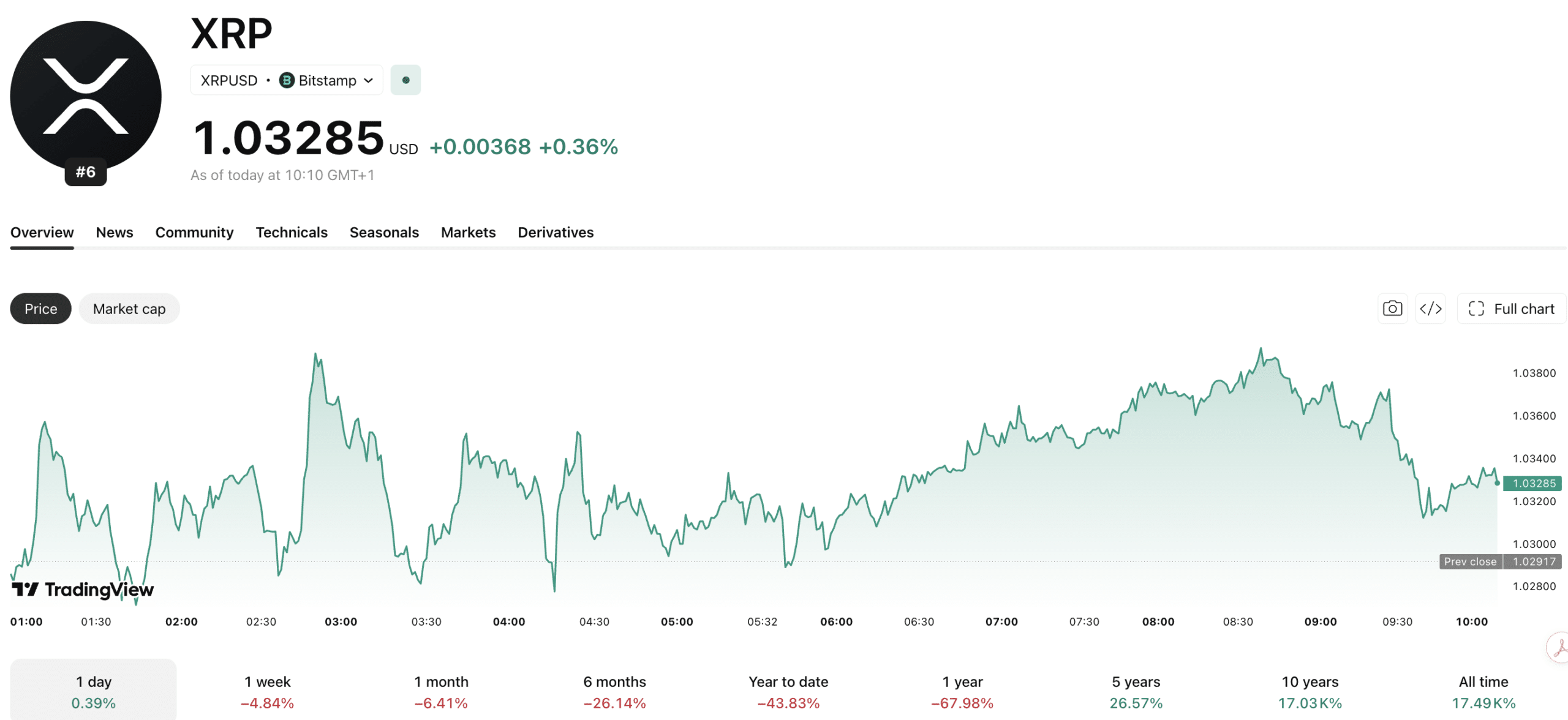
That gap matters for markets. Ripple may keep expanding its payments business while XRP price action depends on direct token demand, exchange flows, ETF activity and broader risk appetite.
Merrick’s post focused on payment adoption, not XRP price. His argument is that crypto payments may grow slowly before becoming normal, just as online shopping did after years of doubt.
The comparison also shows that adoption depends on trust. E-commerce needed safer checkout systems, better delivery networks and familiar devices. Crypto payments still need easier wallets, reliable stablecoins, regulation, merchant tools and strong consumer protection.
If those systems improve, crypto payments may become less visible to users. The payment may feel normal, while blockchain settlement works in the background.