In the immediate aftermath of Anthony Fauci’s tense congressional hearing on Wednesday, where he refused to answer any questions and invoked the Fifth Amendment, MAGA figures and Republican officials appeared to be seeking one thing: jail time for the former White House chief medical advisor.
“Why, when Fauci walks off of there today, is he not cuffed?” Steve Bannon, a former advisor to President Donald Trump, asked on his War Room podcast on Wednesday. “People are furious today to cut on this and see Fauci hiding behind the Fifth Amendment … He should die in prison.”
“Why isn’t he under arrest?” far-right podcaster Matt Walsh wrote on X. “Why isn’t he facing any real consequences? Why aren’t you actually doing anything?”
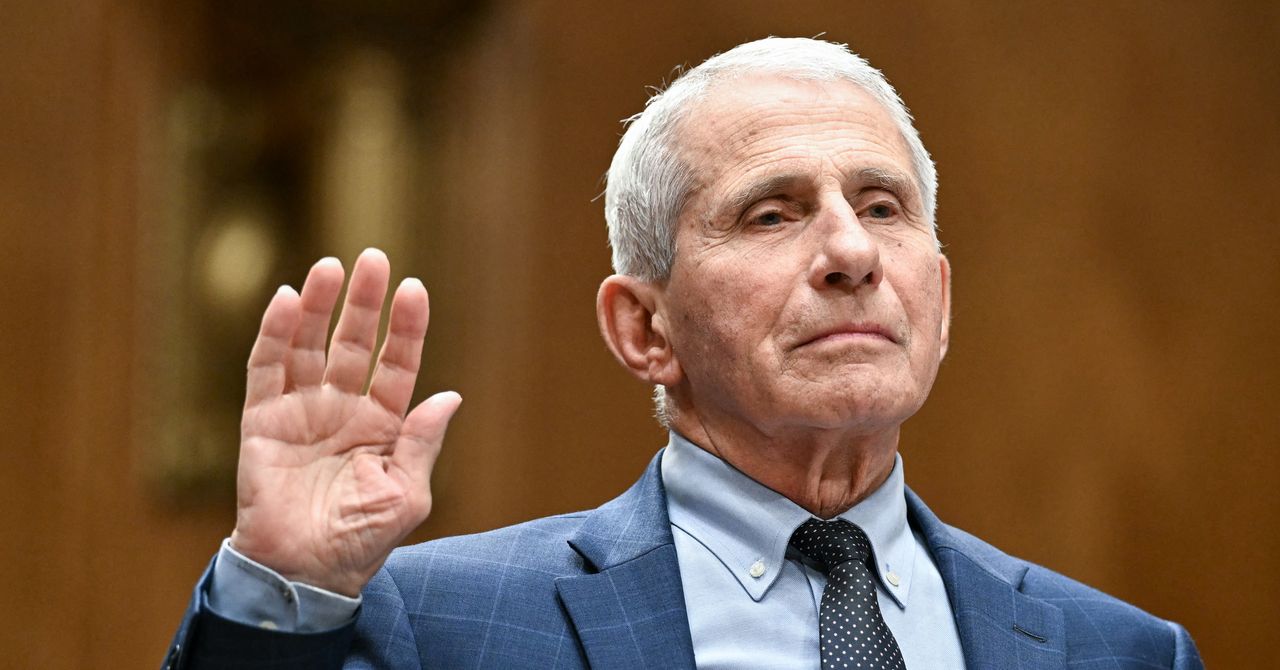
Fauci appeared before the US Senate committee investigating his handling of the Covid-19 pandemic and invoked his constitutional right to stay silent, known as the Fifth Amendment, over 100 times. In his opening statement explaining his decision, he described Senator Rand Paul, who chaired the hearing, as having an “unhinged obsession” with him.
“The only conclusion I can reach is that the sole reason he is calling me before this committee is to get me to say something, anything, that could vindicate his repeated public pledges that I end up, in his words, ‘behind bars,’” Fauci said. Paul has long accused Fauci of covering up what could have been the origins of Covid-19.
As calls for Fauci’s imprisonment grow louder from far-right influencers and podcasters, WIRED turned to legal experts to assess just how likely it is that Republicans in Congress could jail the former public health official.
Last year, Fauci received a preemptive pardon from former President Joe Biden, which covered his actions from 2014 until 2025 and made him immune from prosecution for federal crimes during that period, but not anything that he has said or done subsequently.
Republicans like Paul, however, believe that anyone who has received a presidential pardon automatically loses their Fifth Amendment rights, citing a Supreme Court case from 1896 as proof. “I think there is a very real chance that he could be prosecuted for that,” Paul told CBS News after the hearing. “A court ultimately would have to determine: Does the Fifth Amendment apply to someone who already has a pardon?”
Paul said his committee will hold a vote next week on whether to hold Fauci in contempt of Congress, a charge that carries a potential punishment of up to one year in jail and a fine of up to $100,000. If passed, it will be sent to the Senate floor where it would require 60 votes to succeed, which is highly unlikely given it would require Democrats to side with Republicans.
In 2020, Trump pardoned numerous people before he left office, including disgraced former national security adviser Mike Flynn and his former campaign chair Paul Manafort. At the time, US constitutional scholar Aziz Huq concluded that the pardons opened up the possibility of contempt if those Trump associates refused to testify before Congress about action they took during Trump’s first term in office.
Bannon himself was pardoned by Trump in 2021, but only for specific federal charges related to his “We Build the Wall” scheme, whose leaders were charged with defrauding donors out of hundreds of thousands of dollars in the name of a border wall between the US and Mexico. So in 2022, when Bannon refused to hand over documents or appear for a hearing in Congress related to his role in the attack on the Capitol on January 6, 2021, he was found in contempt of Congress and sentenced to four months in jail.