
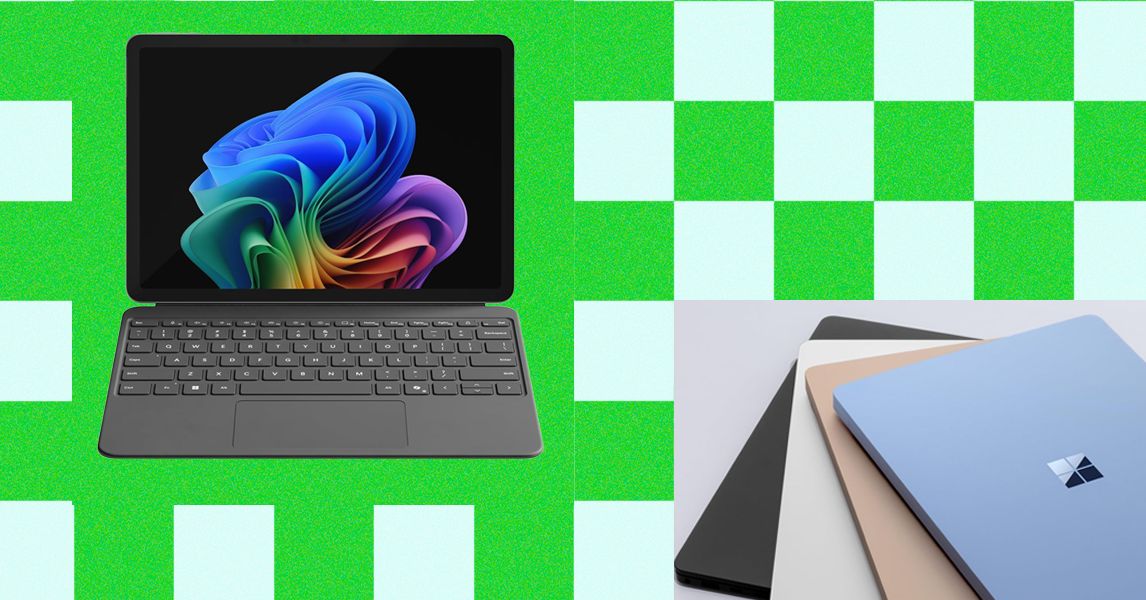
But I hear you say, why not the 2026 model (also known as the 8th Edition)? Microsoft launched a refresh this year with new chips inside (the Snapdragon X2 lineup, if you care to know). I’ve tested these chips in other laptops, such as the Lenovo IdeaPad Slim 5x, and they speed things up in meaningful ways—especially on the graphics front. Unfortunately, Microsoft made the poor decision not to send these out to reviewers for independent testing, so I’ve never had one to try myself.
The real problem, though, is the pricing. Like many laptop manufacturers this year, Microsoft has dramatically increased the price of its products. You can thank the ongoing memory shortage for that. Right now, you can still buy the 2024 Surface Laptop with 512 GB of storage for $999 on Amazon. It’s only for the Dune color right now, whereas the Black and Silver models are $50 more. These are not quite as cheap as they were in 2025, but it’s a great deal. It’s especially affordable compared with the 2026 version. It’s over $400 more for an otherwise identical configuration, and sometimes it jumps to the retail price of $1,600. That’s just too much for what you’re getting. I just don’t think the performance difference is worth that much. It’d be a different story if the 2024 model were unavailable, but I have a hard time suggesting someone buy the newer one at the moment.
The Surface Laptop comes in two main variants: 13.8-inch and 15-inch screen sizes. Both are great, but I think the 13.8-inch model offers plenty of screen real estate for the average person, especially with this aspect ratio.
The Most Powerful Surface


Microsoft
Surface Laptop Ultra
The Surface Laptop Ultra might bear some resemblance to the standard Surface Laptop, but it’s a completely different animal under the hood. It’s no thicker than the 15-inch Surface Laptop, despite offering far more performance. That’s thanks to the Nvidia RTX Spark N1X chip inside, which delivers GPU performance typically found only in discrete graphics cards, like those in gaming laptops. In many ways, this is Microsoft’s answer to the MacBook Pro—a laptop designed for content creators, media pros, and a burgeoning new demographic: AI enthusiasts. It can be configured with up to 128 GB of unified RAM, allowing you to feed that GPU tons of memory to access larger AI models—all running entirely on-device. I tested the 32-GB version of the Surface Laptop Ultra, which limits you from running larger AI models (such as 70-billion parameters and above). In reality, you need something with a more powerful GPU to handle foundation-tier models that really compete with the cloud-based services people are used to. I don’t know if the case for running local AI models is fully made yet, but the Surface Laptop Ultra lets you dip your toe in.