Key Takeaways
- Mysten Labs’ Evan Cheng predicts Sui will carry all digital payments within four years.
- Sui has moved more than $65 billion in gasless stablecoin transfers since June 10,.
- Sui’s Hashi testnet, live since July 22, lets bitcoin collateralize loans unwrapped.
A Four-Year Timeline for the Whole Internet
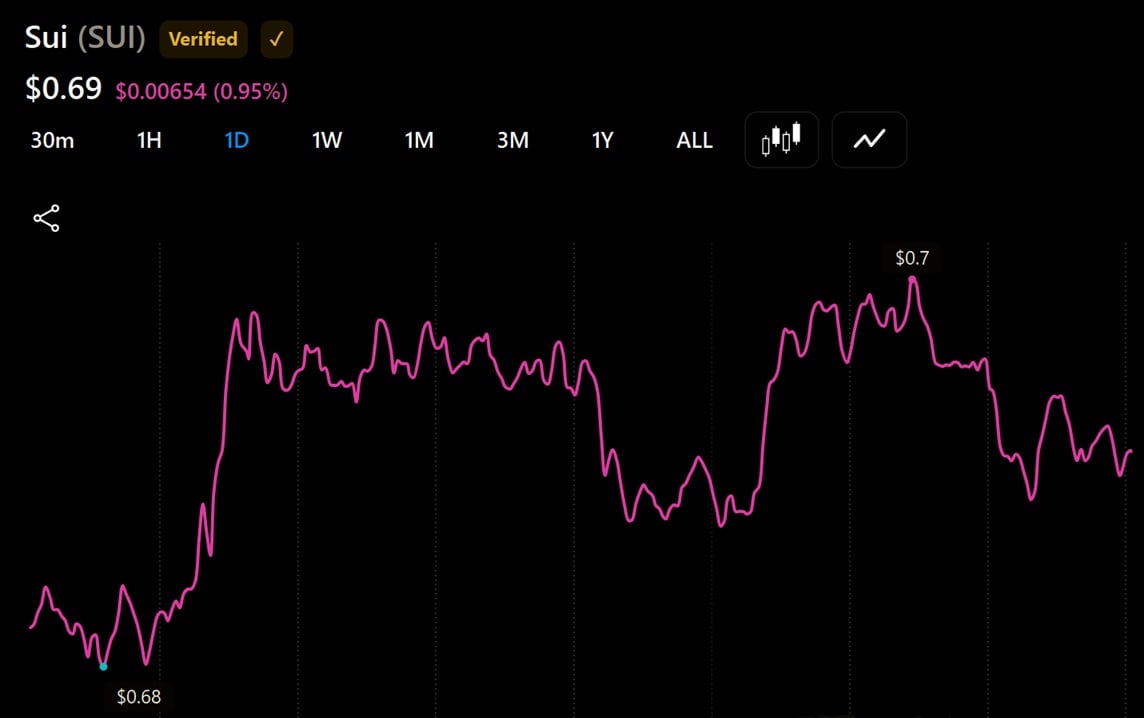
Cheng’s prediction is a sweeping one, i.e. within four years the volume of digital payments moving across Sui will rival the volume moving across the traditional internet’s card networks and bank rails combined. It is the kind of claim that invites skepticism on its face, especially from an L1 still trading at a fraction above 60 cents per token.
But Cheng has made a habit of putting forth Sui’s roadmap in infrastructure terms rather than trading terms, telling reporters earlier this year that current web3 infrastructure is still stuck in what he called the dial-up era.
Mysten Labs, the Sui development studio Cheng leads as chief executive, was founded in 2021 by a group of engineers who previously built Meta’s abandoned Diem blockchain and its Move programming language. That pedigree in payments infrastructure is central to how Cheng pitches Sui’s endgame, which is not as a venue for speculative trading, but as settlement plumbing for stablecoins, remittances and eventually agentic commerce between AI systems.
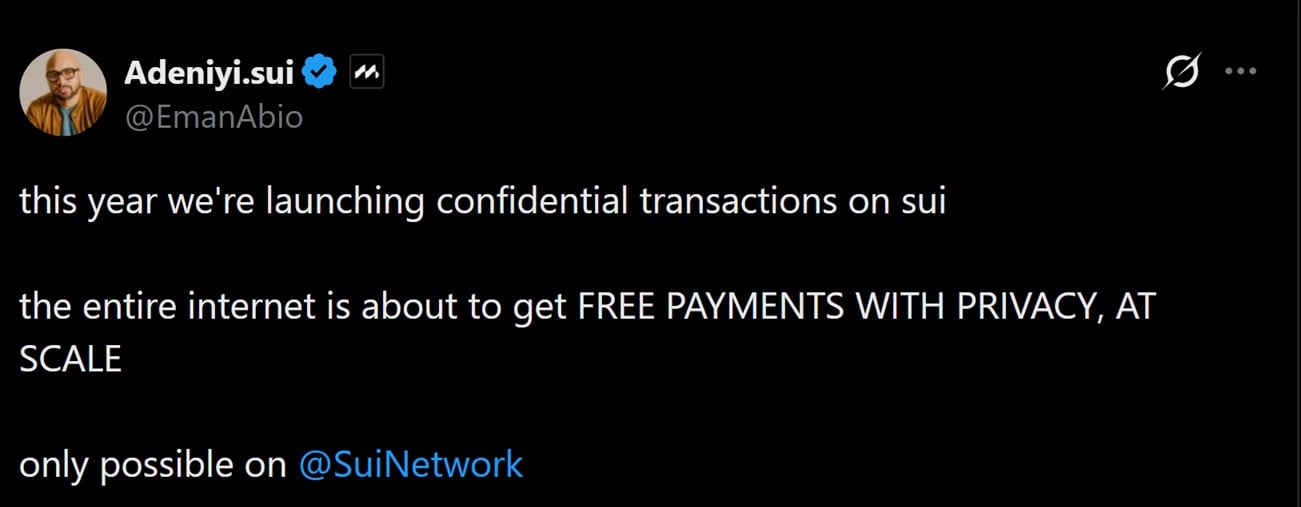
Fellow Mysten Labs co-founder Adeniyi Abiodun put things even more bluntly earlier this year, writing that the entire internet is about to get free payments with privacy at scale as the network’s confidential-transaction features roll out.
The Numbers Behind the Bet
Unlike a lot of foundation-level predictions, this one has a recent data trail attached to it. Sui processed more than $65 billion in stablecoin transfers in the roughly two months since June 10, when Mysten Labs eliminated gas fees for stablecoin movements at the protocol level. That gasless mechanism, layered onto a network that has already carried $2.27 trillion in cumulative stablecoin volume since early 2024, removes what Abiodun described as the core friction of blockchain payments (one that forces merchants and apps to hold a second reserve asset just to cover network fees).
Sui has also been pushing into bitcoin’s territory thanks to the Hashi testnet, which went live July 22. It lets bitcoin collateralize decentralized finance loans on Sui without wrapping it into a synthetic token, a bridge Mysten Labs and the Sui Foundation built with more than two dozen participating institutions.
The pitch there is that Sui can pull a slice of activity from bitcoin’s $1.4 trillion market without asking holders to give up custody assumptions. Layered on top, Sui is also in the process of making stablecoin transactions private by default, a feature institutional users have flagged as a prerequisite for moving real payment volume onto public blockchains rather than private ledgers.
What Skeptics and Believers Both Point to
Sui’s own token has been under pressure from recurring unlock schedules that add new supply to the market on a rolling basis, and its roughly $2.8 billion market capitalization remains a small fraction of the payment volume Cheng is describing.
Whether Sui becomes the rail for “every payment on the internet” or captures a smaller, still-meaningful slice of stablecoin and cross-border settlement remains to be seen. The next year of gasless-volume data and Hashi bridge adoption will be the clearest test of whether Cheng’s four-year clock is realistic or just marketing push from a founder with immense skin in the game.